Anthropic's guide argues that “always-on” is a user experience, not a model that never sleeps. The architecture is five primitives: an event inbox, timers, memory, permissions, and an outbox. A run wakes, works, writes memory, and goes back to sleep so you aren't paying for idle tokens. The most useful distinction in this week's agent writing.
Building always-on agents
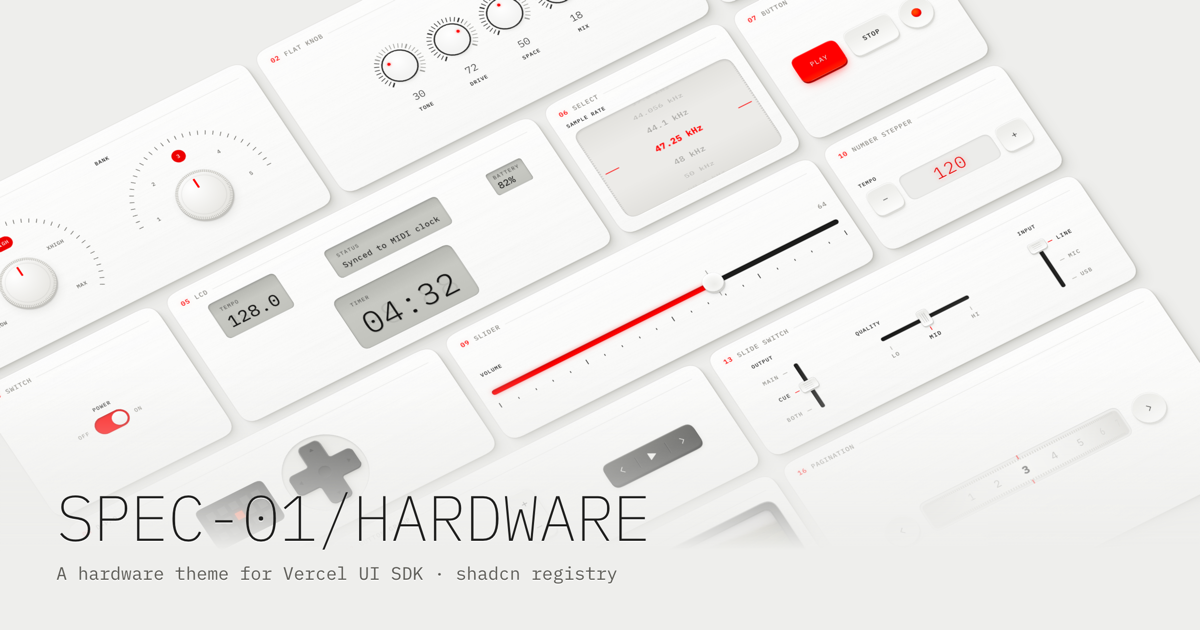
SPEC-01/HARDWARE: themed components built with Vercel UI SDK
Shu Ding built a hardware-themed control set on Vercel UI SDK: knobs, segmented controls, calendars, accordions. He spent almost all his time on look, sound, haptics and wording; the agent wrote the code, and accessibility came along with the behaviors. Source is on GitHub at shuding/spec-01.
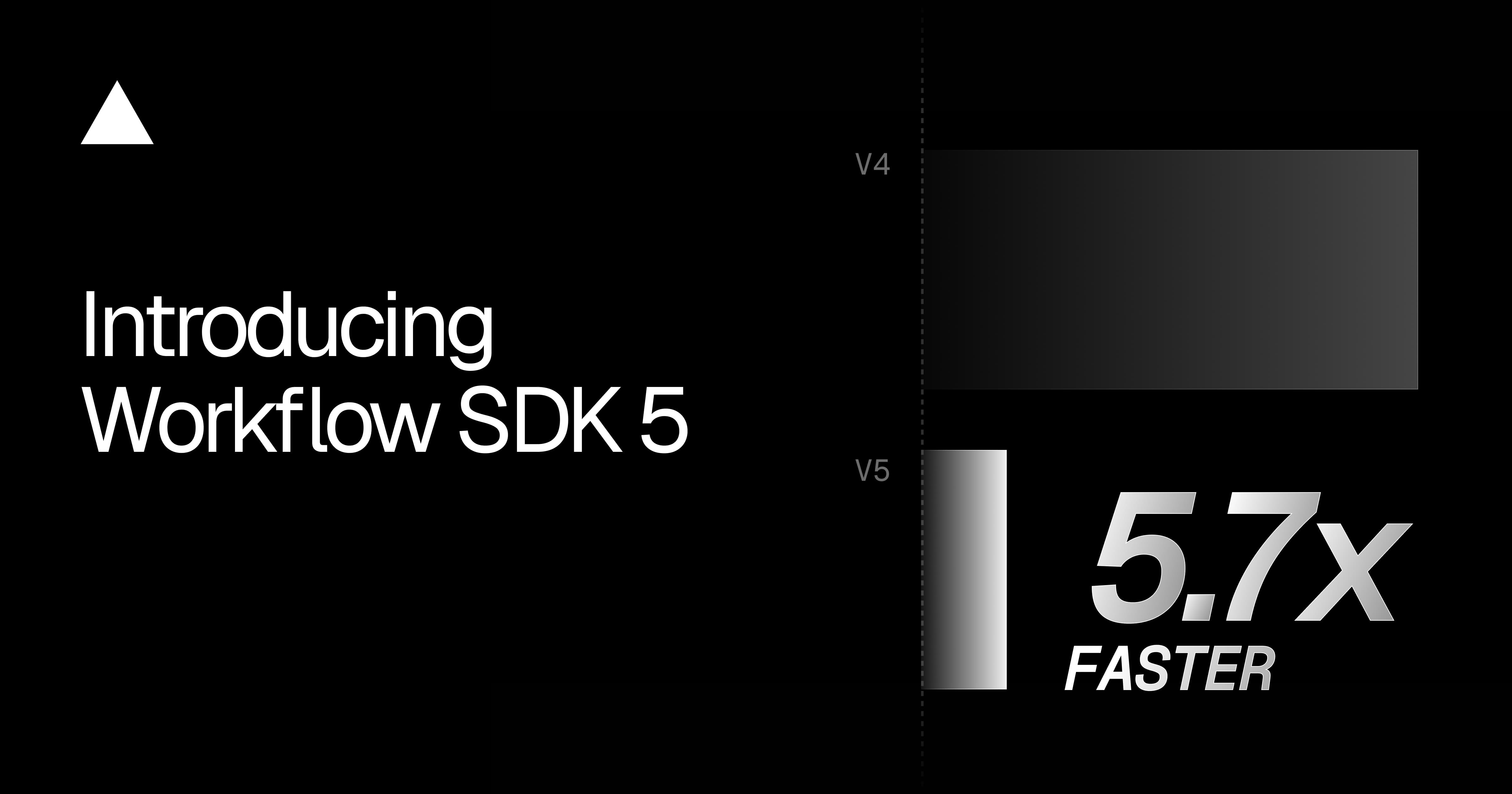
Workflow SDK 5: built for production
Workflow SDK 5 is aimed at production agent loops: up to 25x lower step latency, AES-256-GCM encryption of payloads before they leave your process, regional isolation, and a durability log you can reuse in other harnesses (durable-harness). Guillermo called out time-to-first-step and reliability under real load.

Using pointer velocity to predict which button you'll click
A short demo of pointer-velocity prediction: the interface starts responding to the button you're moving toward before the click lands. A concrete interaction detail worth stealing for dense toolbars and confirm/cancel pairs.
Same interface behaviors, not the same interfaces
shadcn's follow-up to UI SDK: you and I don't need the same generated UI (a calendar vs a plain input is fine). What should be shared is the underlying behavior and its guarantees. A useful frame for design engineers working with agent-generated interfaces.
Releasing Personal Agent Protocol 1.0 (Poppy)
Sierra published Poppy (Personal Agent Protocol) 1.0, so a user's personal agent can talk to a company's business agent, website, or API via a well-known poppy.json. Shopify is enabling it for merchants; Muse already looks for it first. The interesting design question is how much of a company's UI an agent should skip.
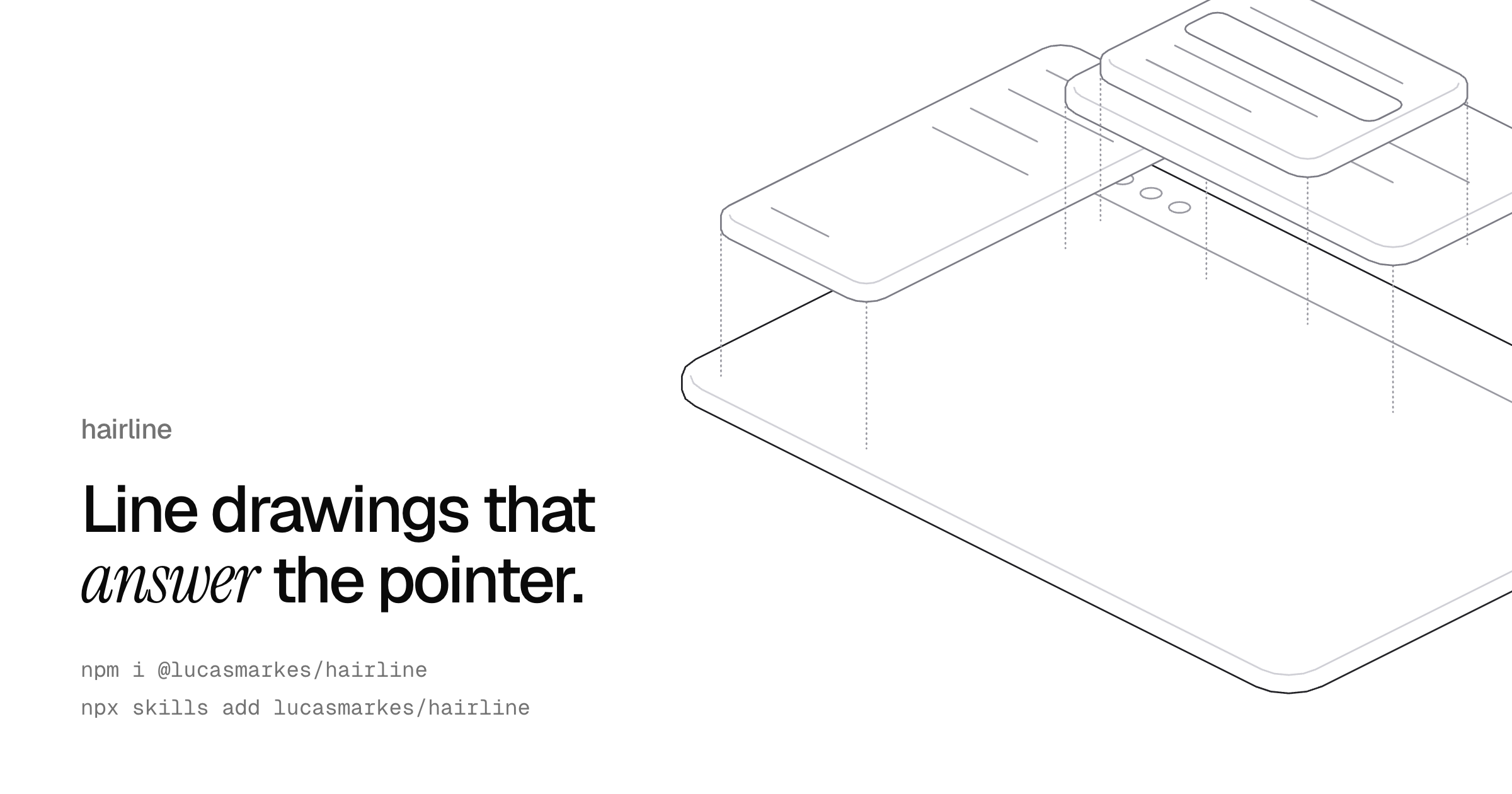
Hairline Figures: 33 interactive SVG line drawings
Thirty-three pure SVG figures grouped by subject, with pointer-reactive motion and a tunable intensity. Closer to Linear-like linework than to typical illustrated marketing. A /hairline-create skill can draw new ones from a mark.
agent-desktop sandboxes: give your agent its own macOS VM
New in agent-desktop: agents can install, clone and drive a macOS VM on Apple Silicon, or attach a remote sandbox. The first image is set up once in a window; clones start headless. A practical path if you want a coding agent to use Xcode or the iOS Simulator without taking over your login session.

在快 AI 时代,我是怎么把 Mole 做成一款「慢产品」的?
Tw93 写 Mole 从 1.13 到 1.19、Windows 版和 73.9K star 之后,真正花时间的是测软件、改图标和文案:装了 853 款 Mac 应用补残留规则,又把 30 多款 AI 工具真正用一遍再写清理。核心判断是代码越来越便宜,差距来自那些只有亲手做过才知道的细节。

UI SDK behaviors are built to get accessibility right on the first generation
shadcn shows how UI SDK 'behaviors' were designed so agents verify accessible interfaces as they generate them. In the demo, first-pass output already scores well on a11y. Worth watching if you're deciding what to put in an agent's UI toolkit.

How to make pixel art trees move in the wind
A tightly written craft note: keep the trunk still, move leaf clumps one whole pixel at a time in a traveling wave, then add gusts. Includes Python and Godot snippets, plus a prompt you can paste into a coding agent. A good reminder that motion quality is still made of specific rules.

HomeView update animation
avstorm captured the update animation on Apple's new HomeView. A clean, short motion study of how a home-screen device handles a system update in the living room.

HomeView's display comes with a “hello” sticker
The new Apple HomeView ships with a “hello” sticker on the display, in the same family as other Apple unboxings. A small packaging detail, and one of the clearer first looks at the device this weekend.
fx.sh subagents: plan with a smart model, delegate to fast ones
Guillermo on fx.sh v0.0.17: subagents feel surprisingly good in a 6.33MB tool. His setup is one line in ~/.fx/AGENTS.md — plan with the smartest model, then hand work to faster subagents. A small, concrete pattern for local agent workflows.

A draggable toolbar exploration, now in an open-source SwiftUI repo
Mike added a draggable toolbar exploration to his SwiftUI-experiments repo, with a clip of the interaction. Ready to read and fork if you're collecting native toolbar patterns.
How to find meaning in large tech companies
Sean Goedecke argues that people don't mainly hate big tech because dysfunction blocks shipping — many won't even study the mess, the way you avoid a messy room. Acting invested in OKRs and hype can feel like studying Stephenson's meaningless Book. A sharp essay if you work inside a large company and want a better stance than cynicism.

CarPlay crumbs on HomeView: “when it’s safe to do so”
HomeView surfaces CarPlay-related copy that only makes sense on the road: “when it’s safe to do so and will not distract you.” A sharp bit of product-writing evidence that this home display is being treated as part of the wider Apple device graph, not just a picture frame.

Vercel Sandbox now starts up to four times faster
A changelog that matters if you already use Vercel Sandbox for agents: startup can be up to 4x faster. Rauch's “Sandbox is inevitable” line is the product thesis; the latency cut is the part you can feel.

The Siri AI API in the iOS 27.3 beta, from Hacking with Swift+
Paul Hudson flagged a Hacking with Swift+ session on building a complete app with the new Siri AI API in the iOS 27.3 beta. Even if you missed the live stream, this is the API to look up if you want Siri to do real work inside your app.

The new iPad mini is thinner, lighter, and easier to hold
Hands-on notes on the new iPad mini: thinner and lighter, with a slightly narrower shape that is easier to hold. Also worth the adjacent clip of the new power on/off sounds, which sit lower than the iPhone's.

Saved flows in agent-browser: record a browser task, replay it without the browser
agent-browser can now record a flow and replay it as a compact data task: 13.7 KB of page becomes 328 bytes, with new params each run and only the fields you asked for. A practical step from “agent, click around” to a stable, cheap tool the agent can rediscover.

Artist page UI: Apple Music vs Spotify vs YouTube Music
A side-by-side of artist-page layout, typography and hierarchy across Apple Music, Spotify and YouTube Music. Useful as a quick reference when you're designing a media profile or comparing how each product treats artwork, actions and metadata.
RicoUI Blocks: an open-source library for visual and motion experiments
The author open-sourced RicoUI Blocks, a small component library aimed at visual and interaction experiments rather than a single design-system look. Early-stage and updated slowly, but a useful reference if you want components that are less generic than the usual kit.

HayaBuild:没有本地 Mac 也能把 iOS 应用推上 TestFlight
图灵做了超快速构建服务 HayaBuild:用 Muse 或 Grok bot 写 iOS 应用并推到 GitHub 后,会自动在他的构建服务上编译、上传 TestFlight,并生成截图对比。本机不再需要一台一直开着的 Mac,适合独立开发者的云端出包流程。
Linear's mobile app is now built around chatting and shipping with agents
Karri positions the Linear mobile app around chatting with the agent, running the cloud coding agent, reviewing and merging, plus docs, projects and issues. A clear product bet: the phone is for directing agents, not just triaging tickets.

Asuka v0.1: another cross-platform native UI framework
egoist released Asuka v0.1, a new cross-platform native UI framework. Still very early, but worth a look if you're tracking alternatives to Electron and the current wave of 'native everywhere' toolkits.

Agent 会话不该只有一个主聊天,也不该是一堆要人记的 Session
豆沙认为单一主会话看不见子任务细节,纯 Session 列表又要人自己记住每个在干什么。更理想的是人只盯主对话,由协调器判断这条消息是闲聊还是属于某个任务,再决定是否展开或干预。对 Agent 产品信息架构很有参考。

把等待做成反馈:Spinner、骨架屏和先反馈再纠正
《999 个小技巧》系列里讲等待态:几秒内的操作用按钮 Spinner 加 Toast;结构已知时用骨架屏避免跳动;有时应该先给出反馈,再根据结果纠正。适合在 vibe-coded 产品里把「转圈」换成有语义的等待。
DeepSeek 把产品背后的核心能力都开放到了 API
DeepSeek 产品负责人天一表示,产品背后的各项核心能力已通过 API 开放,希望实现门槛降低后,社区能长出更多样、更极致的产品。和他同一天说的「下一个超级 App 也可以只属于你一个人」是同一条产品判断。

几条能减轻 AI Slop 感的产品设计指令
一套可直接贴给 agent 的设计约束:用 Design Token 管颜色和样式、按成熟组件库建立语义和 Do/Don't、统一连续圆角和 4 的倍数间距、删掉多余 UX 文案。实用,针对最近生成界面最常见的脏感。

Orca 卸载后仍在所有 coding agent 的 hook 里冷启动 Python
一篇排查笔记:Orca 卸了之后没清理 ~/.orca/agent-hooks,结果 Antigravity、Codex、Gemini 等 11 个 coding agent 的全局 hook 还在,每次对话和工具调用都会同步阻塞再冷启动 Python。如果你的 agent 突然变慢,值得先查这类残留 hook。

A status-picker interaction with a light, tactile motion
A short clip of a status picker: compact, tactile motion that makes a routine control feel considered. A small interaction reference, not a case study.

1930–40 年代大光明照相的中式 Art Deco 字体
拆解一张上海大光明照相的字标:汉字融几何构成与行书、英文用横粗竖细的逆视觉、地址用隶书,三排文字收进一个盾形。一段很具体的中文与拉丁混排案例。

怀旧手记|索尼 CLIE:千禧年的高端 Palm OS PDA
一篇把索尼 CLIE 当作设计对象来写的怀旧长文:千禧年高端 Palm OS PDA 的做工、屏幕和交互,以及它在当时消费电子里的位置。适合周末慢慢看,不是新闻。

LanDesk:从 RustDesk fork 出来的局域网远控
作者因公司不允许打洞远控,fork 了 RustDesk 做局域网里用的 LanDesk,并先做了手机虚拟按键去玩 Mac 上的 2048。AGPL-3.0 开源,是一个起点很小、动机很具体的独立项目。

用纯 CSS 做 InDesign 式「复合字体」
一个免费开源的网页小工具:汉字、假名、标点、西文和数字可分别指定字体、大小和基线,边看校样边调,最后导出可粘贴的 CSS。排印向的实用工具,不必装插件。

How Lifetime shows sun, sky and weather with almost no UI
A thoughtful answer to a hard constraint: let people see sun position, sky lighting and weather for any time of day, without stacking chrome. A compact interaction study from the Lifetime app.

A technical breakdown of how Shopify Design was built
A thread on shipping Shopify Design, including the technical choices behind the site. Still a solid reference if you're building a serious design-system marketing site.

Work-section animation that returns to place across layouts
A portfolio work/project section whose animation travels and then settles back into the original position as the layout changes. A useful motion reference for project grids.

A beautiful loop by Apple
A short, well-made Apple motion loop. No thesis, just a reminder of how far a tightly crafted loop can carry a brand moment.